Showing posts with label Russian Navy. Show all posts

Monday, August 13, 2012

BE-12 Chaika (Nato:Mail)

This is an ASW aircraft that entered service during the Soviet Union and continued to serve into the new century.  It is believed that several of the aircraft are still operational with the Black Sea fleet.

The Mail looks like it is a relic of Wold War II, but it if fact entered the fleet in 1960.

150 of the aircraft were built, with its primary mission being ASW and maritime patrol. 

The Be-12 is an amphibious aircraft that is often referred to as a flying boat. 

In addition to serving in the Soviet Navy and later the Russian Navy, the Be-12 served with a number of other navies, including Egypt and Syria. 

Russia is currently testing a new ASW aircraft and with its appearance the last of the Mail's should be retired. 


Monday, August 6, 2012

In past blogs we have talked about some of the various fleets of the Russian Navy. Today I wanted to talk about one of the Russian Navies most important ports:

Severomorsk
File:Coat of Arms of Severomorsk (Murmansk oblast).png
Severomorsk is situated in the northwestern part of the Kola peninsula, close to Norway. The main asset of this port is that it remains ice free all year, thus allowing for naval operations at any time. 

To get to the city you would need a special pass. Since the 1950's when Severomorsk became the administrative center for the Northern Fleet it has been a closed city. 

Severomorsk is the home port for the bulk of the Russian Northern Fleet. 
Aerial view of Severomorsk
This city was once a mystery to other navies of the world. You would even see references to it in popular Cold War fiction and movies, but since the fall of the Soviet Union many navies have done port visits to Sevormorsk. 
USS Yorktown in port Severomorsk
Severomorsk will continue to be the headquarters of the Russian Northern Fleet, and will likely see a resurgence in the coming years as the Russian Navy modernizes and rebuilds. 


Monday, July 2, 2012

Tartus, Syria


This city has been in the news a lot lately. I have heard of Tartus often in articles about the Russian Navy, and knew that it was a port facility that the Russian Navy often used. What I didn't know about was the history of how and why the Russian Navy maintained a presence in Tartus.

Russian facilities in Tartus

The Soviet Navy first began using Tartus in the 1970's, along with other ports in the Mediterranean Sea. At the time the Soviet Navy maintained 5th Mediterranean Squadron. Eventually only Tartus was used for support and repair of vessels that were deployed to the Mediterranean Sea. 
Russian and Syria naval officers in Tartus

After the fall of the Soviet Union the Russian navy very rarely sent and ships out into the Mediterranean Sea, but they still maintained a presence in Tartus. 

Through various agreements with the Syrian government the Russian Navy is currently expanding and modernizing its facilities in Tartus. 

Currently the facilities are supporting anti-piracy operations.

Russia has invested a lot of time and money into the facility in Tartus, and I believe that with the current situation in Syria the Russian Navy is worried about losing that investment. 

Friday, June 15, 2012


Syria and the Russian Navy


Once again it's Friday and we are ready for the end of week news.  The big news out of Russia this week has been the sale of attack helicopters to Syria, with the US condemning the sale and Russia defending it. So how does this effect the Russian Navy? The Russian Navy maintains a port complex in the Syrian city of Tartus. This base is very important from a prestige and logistical point of view. If the current Syrian regime were to fall, Russia is very worried about losing its influence. 

Other News:

Yuri Dolgorukiy surfacing during sea trials.
The Yuri Dolgorukiy put to sea to finish sea trials. The article is in Russian.

Yekaterinburg on fire while in drydock


It will take up to two years to repair the ballistic missile submarine Yekaterinburg, which was damaged in a fire in December. Again the article is in Russian. 

Monday, June 11, 2012

What's in a Name?


Astrkhan. You can see the name on the side of the ship

As I read about the Russian Navy I often have wondered where the ship names came from. Some like the Настойчивый Persistent which is an Sovremennyy class destroyer in service with the Baltic  Fleet, follow the British manner of naming ships. In the British Navy you will find ships such as the Invicible, Tireless, etc.

Most Russian Naval vessels have their ship number on the side


Many other ships in the Russian Navy bear the names of cities. While this may seem to be in the tradition of other Navies around the world, it also has a deeper meaning. After the fall of the Soviet Union the Russian Navy was in shambles. They had no money, and what money the Navy did have was used to decommission ships or was lost to corruption. It was around this time that ships of the Russian Navy started to adopt names. Before this many of the ships were simply know by their class and ship number, such as K-222 or BPK-650.  Many ships adopted names of major Russian cities, and in return the ships received support from the cities. It was a clever way of feeding the sailors and keeping the Russian Navy running.

The sail of the Yuri Dolgorukiy

 Another popular naming method is to name a ship after a famous historical figure such as an admiral. You can see this with the new Borei class submarines, with the first two ships of the class being named Yuri Dolgorukiy and Alexander Nevskiy.

It will be interesting to see what direction the Russian Navy moves in the future naming of ships.
 For an entire list of ships currently serving in the Russian Navy and the names of the ships check out this wikipedia page.

Friday, June 8, 2012

Exercises-Exercises

Russian sailor during Barents-2012


It seems as though the Russian Navy is doing a lot of exercises with a host of partners. As I wrote before I believe that this is Russia’s way of improving its reputation in the world. Because of the poor funding and accidents of the past 15 years or so the Russian Navy is not held in very high respect. However as they modernize their force the Russian Navy leadership is looking for ways to change the way they are viewed in the world.
Russian and Norwegain ships during an exercise

At the start of June  the Russian and Norwegian Navies kicked off another exercise called Barents 2012.
 
A spokesman from the Northern Fleet described the goal of the exercises,
“These exercises are aimed at searching for, saving and the evacuation of crew members of ships and aircraft that find themselves in SOS situations at sea.”
Russian warship sails to Baltic Sea for NATO naval drills
Amphibious operations during BALTOPS

The Russian Navy is also participating in BALTOPS-2012 in the Baltic Sea, and they just completed Farvater Mira-2012  with the Ukranian Navy.


Though not directly related to the Russian Navy, the news that the Russian built aircraft carrier INS Vikramaditya  will start sea trails has a direct reflection on the state of Russian shipbuilding.

Friday, May 25, 2012


Russian Navy news from this week


Happy Friday! This is a time that the Russian Navy is rebuilding, transforming, and preparing for future missions. I have covered it in the past with blog posts about new ships and new weapons systems. So check past blog posts for anything that you might have missed, or for anything that might be interesting to you. 

This week was full of news about this rebuilding process. Here are a few of the stories that I found.
Yuri Dolgorukiy is set to joint the fleet in October. This was confirmed by a source within the Russian Navy. The official also stated that the second ship in the class, the Alexander Nevskiy, will be joining the fleet at a later date. It is not known if the Yuri Dolgorukiy will remain in the Northern Fleet or if it will be transferred to the Pacific fleet.  The Pacific fleet has much older ballistic missile submarines than the Northern Fleet, but the Northern Fleet has always been the main fleet of Russia, but that could be changing with the emergence of China and the United States in the Pacific. 


The sailing ship Nadezhda has left Vladivostok and is headed to South Korea in order to conduct training and also to take part in a sailing regatta in the city of Yusa. 


The large ASW ship Admiral Kulakov from the Northern Fleet has assumed anti-piracy duties in the Gulf 
of Aden.


A new frigate for the Caspian Flotilla fired missiles during sea trials. This will be the second frigate of the Gepard class to join the Caspian Flotilla. 

In Monday's update we will cover the Caspian Flotilla. Have a great weekend, and remember in the US that this is Memorial Day weekend. I suggest that we all take a moment to remember all those who have given their lives in defense of their homeland.

Monday, May 21, 2012

Bulava

Bulava being fired from Dmitri Donskoy


The RSM-56 is a new ballistic missile for the Russian Navy that has been in some form of development since 1999. The missile was to be the new missile for a new class of SSBN, which had been laid down in 1996.

The missile however failed its first three tests, and both the missile and the construction of the submarine were delayed.

The design bureau started from the ground up, and designed the Bulava. The new missile was significantly different, and because of this the SSBN that had been laid down had to be heavily modified.  

Spiral glow after a failed Bulava launch

The Russian Navy expected to take delivery of the missile and submarine in 2005.

However the missile again failed tests and the missile was delayed. 

In 2009 the missile's chief designer resigned, and the program was examined once again.

Since a new chief designer has been in place the missile tests have been successful.

Yuri Dogorukiy being loaded with Bulava

The missile has now been fired from the new SSBN Yuri Dolgorukiy, and will enter serial production.

Yuri Dolgorukiy getting ready to head to sea.

This missile is the most expensive weapons system ever developed by the Russian Federation. Because of the delays in development and deployment the very force structure of the Russian Navy has been effected, and will continue to be effected for the next several years.


Friday, May 11, 2012


New President, New Commander
Vladimir Putin Victory Day Parade
Putin with veterans during the Victory Day celebrations

This week Russia inaugurated a new president (kind of new). 
 However on President Medvedev’s last day in office he replaced the commanders of the Air Force and Navy. Prior to this Vladimir Vysotsky had been the commander of the Russian Navy for nearly five years. However his time in the post was seen as one laden with accidents, and the leadership felt that he had done little to improve the capabilities of the navy.

Vladimir Vysotsky
While he was commander in chief there was an accident on a submarine in the Pacific Fleet that killed 20 people, and more recently in December there was a fire while a nuclear submarine carrying nuclear weapons was in dry dock.
Igor Korotchenko, chairman of the Defense Ministry’s Public Council previously said that the reshuffle was a normal practice for military officials.
“Medevedev’s move will give the road to new, younger military specialists,” Korotchenko said.

While Vysotsky cannot be held personally responsible for these accidents, they happened under his leadership.  Sometimes it’s better to bring in a new person and see what they can do.

Viktor Chirkov
The new commander of the Russian Navy is Viktor Chirkov. He was commander of the Baltic Fleet prior to this assignment. We will cover his biography in our Monday morning update.


Monday, April 30, 2012

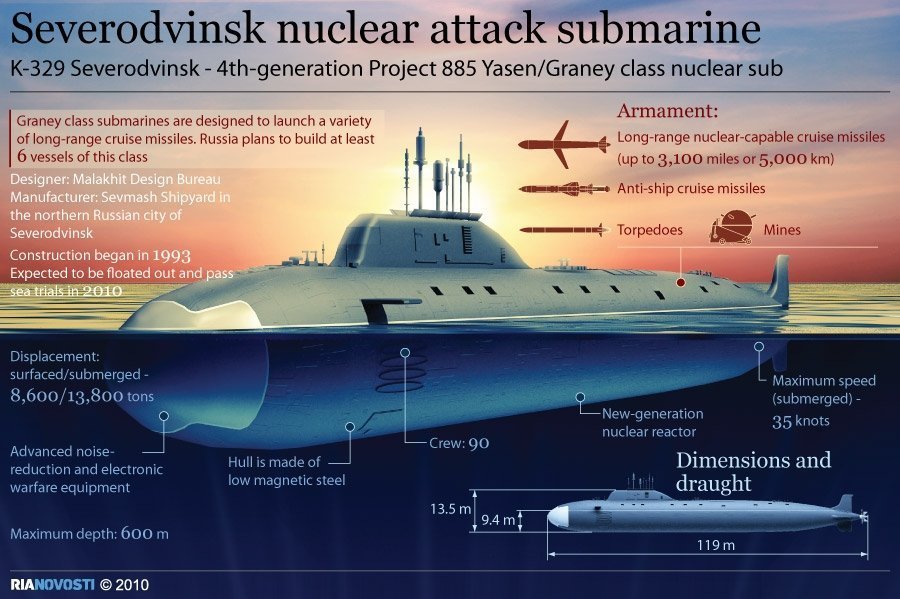
Yasen Class
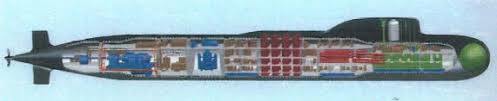
Yasen class internal layout

It can be a little confusing when looking up information on this class of Russian submarine. There are many different names that this class has been called.
First the Russian Navy refers to the project as Project 885 Yasen (Russian: Проект 885 "Ясень", Yasen means ash tree). The class is also sometimes referred to as the Severodvinsk class because this is the lead ship in the class. There is also the term Graney class, but this has been used less and less.
Severodvinsk getting underway

The lead ship of this class was launched in September of 2011, and later that month put to sea for sea trials. It is expected that the Severodvinsk will join the fleet in the latter half of 2012. The second boat of the class, Kazan, is currently under construction.  
Yasen Class in drydock

The Severodvinsk was initially laid down in 1992 and was delayed for financial reasons. The price of the lead ship is believed to be more than one billion US dollars. The follow-on ships of the class will feature upgraded weapons and electronics packages.
 
The Yasen class submarines are multi-role submarines that were developed from lessons learned from the Akula, Oscar, and Alfa class submarines.
 
According to several naval analysts this class will be the quietest Russian submarine ever built, but that has yet to be confirmed.

K-329 Severodvinsk can be seen in Google Earth at 64°34′31″N 39°48′02″E / 64.575181°N 39.800550°E.
Russia is planning to built 10 of these submarines, to replace older Soviet submarines.
Here is a layout for the Russian speakers out there.

Friday, April 13, 2012

Russians in Syria


It was reported by RIA Novosti that the Russian Navy will maintain a presence off the coast of Syria.
This is in response to the large number of US, British, and French warships currently operating in the area.

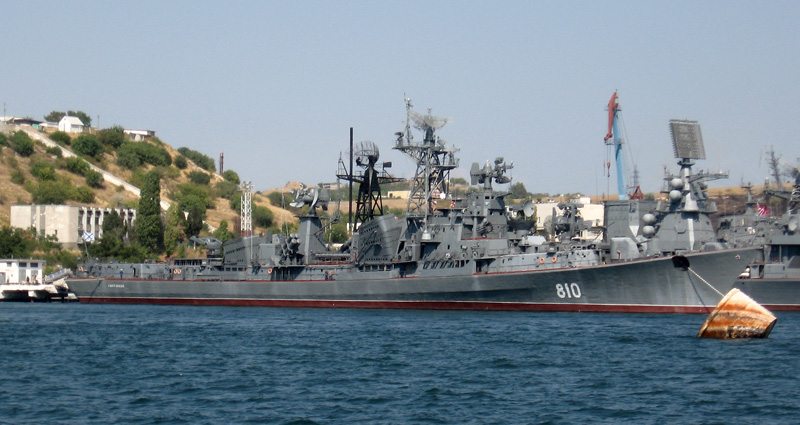
At the beginning of the month the Russian Navy dispatched the destroyer Smetlivy to the area.
It is reported that this ship intends to make a port call in Tartus, Syria.


File:Smetlivyy2007Sevastopol.jpg
Smetlivy, Kashin class destroyer


Other Russian warships are reportedly making preperations in order to maintain the presence.


I believe that all of this is connected with the Russian need to maintain its past spheres of influence.


 Syria was an important ally during the Soviet period, and still is a major purchaser of Russian military technology.

Here are the links to the articles:

English- http://en.rian.ru/world/20120413/172799962.html
Russian- http://news.rambler.ru/13560666/

Friday, April 6, 2012

Ties to the Indian Navy


I wrote about this subject just about a month ago, but the ties between the Indian and Russian navies are once again in the news.

Officially on Wednesday the INS Chakra was accepted by the Indian Navy. This contract was signed for 10 years, and is worth one billion dollars to the Russian Navy. But this may not be the only delivery this year to the Indian Navy. 

INS Chakra being commissioned in the Indian navy


The Vikramaditya (previously the Admiral Gorskov of the Soviet and Russian Navy) will be delivered to the Indian Navy by the end of 2012.


The Vikramaditya  in the shipyard at Severodvinsk.


Several more Talwar class frigates will also be delivered before the end of the year.


Talwar (Krivak III) class frigate

All three of these deals have been delayed. In some cases the Indians have endured several years worth of delays, and restructuring of contracts. Like a lot of promises made in the Russian defense industry, only time will tell if these promises are fulfilled.