Showing posts with label Soviet Union. Show all posts

Monday, August 6, 2012

In past blogs we have talked about some of the various fleets of the Russian Navy. Today I wanted to talk about one of the Russian Navies most important ports:

Severomorsk
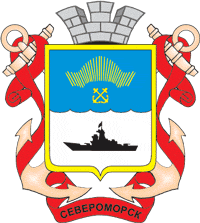
File:Coat of Arms of Severomorsk (Murmansk oblast).png
Severomorsk is situated in the northwestern part of the Kola peninsula, close to Norway. The main asset of this port is that it remains ice free all year, thus allowing for naval operations at any time. 

To get to the city you would need a special pass. Since the 1950's when Severomorsk became the administrative center for the Northern Fleet it has been a closed city. 

Severomorsk is the home port for the bulk of the Russian Northern Fleet. 
Aerial view of Severomorsk
This city was once a mystery to other navies of the world. You would even see references to it in popular Cold War fiction and movies, but since the fall of the Soviet Union many navies have done port visits to Sevormorsk. 
USS Yorktown in port Severomorsk
Severomorsk will continue to be the headquarters of the Russian Northern Fleet, and will likely see a resurgence in the coming years as the Russian Navy modernizes and rebuilds. 


Monday, June 11, 2012

What's in a Name?


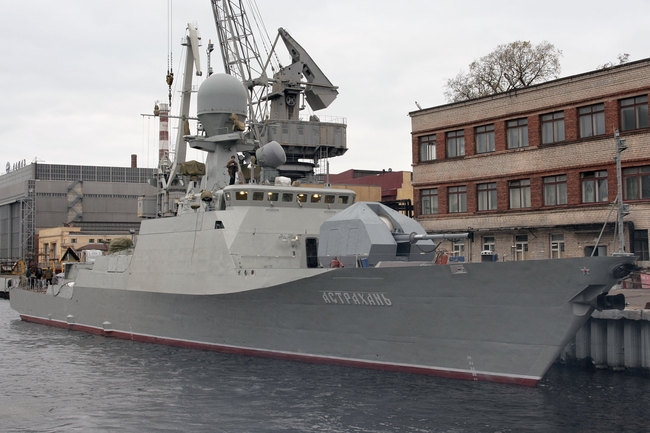
Astrkhan. You can see the name on the side of the ship

As I read about the Russian Navy I often have wondered where the ship names came from. Some like the Настойчивый Persistent which is an Sovremennyy class destroyer in service with the Baltic  Fleet, follow the British manner of naming ships. In the British Navy you will find ships such as the Invicible, Tireless, etc.

Most Russian Naval vessels have their ship number on the side


Many other ships in the Russian Navy bear the names of cities. While this may seem to be in the tradition of other Navies around the world, it also has a deeper meaning. After the fall of the Soviet Union the Russian Navy was in shambles. They had no money, and what money the Navy did have was used to decommission ships or was lost to corruption. It was around this time that ships of the Russian Navy started to adopt names. Before this many of the ships were simply know by their class and ship number, such as K-222 or BPK-650.  Many ships adopted names of major Russian cities, and in return the ships received support from the cities. It was a clever way of feeding the sailors and keeping the Russian Navy running.

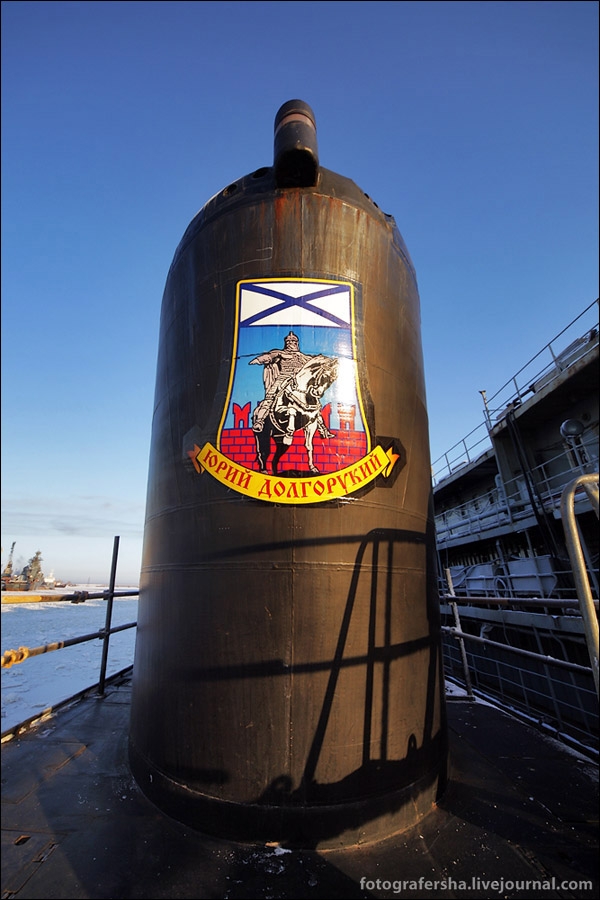
The sail of the Yuri Dolgorukiy

 Another popular naming method is to name a ship after a famous historical figure such as an admiral. You can see this with the new Borei class submarines, with the first two ships of the class being named Yuri Dolgorukiy and Alexander Nevskiy.

It will be interesting to see what direction the Russian Navy moves in the future naming of ships.
 For an entire list of ships currently serving in the Russian Navy and the names of the ships check out this wikipedia page.

Friday, May 4, 2012

Victory Day


Victory Day is one of the biggest holidays in Russia. This holiday marks the victory over Nazi Germany, in which the Soviet Union suffered by some accounts 25 million casualties. 
Sailors in the 1945 Victory Day parade

Throughout the country the day is marked by parades of military units. This includes the navy. 

Victory Day parade 2010
It is a common sight to see the veterans of the war out in their uniforms. The black and orange ribbon is a sign of remembrance for those that did not return home from the war. Every one in the area of the former Soviet Union was affected by the war. They either lost loved ones and/or were in territory occupied by the Germans. 


The military units that participate in the parade are chosen for their outstanding performance. They practice for weeks ahead of the parade in Moscow.  It is considered a great honor for the soldiers and sailors who take part in the parade. 


For those who have never seen parts of the parade, here is a video. 

Monday, March 5, 2012


The Northern Fleet

      Throughout the Cold War the Northern Fleet was the main area of naval activity for the Soviet Navy, and this fleet remains very active. Officially this fleet was established in 1937 as part of the Soviet Navy. In movies and books it is probably better know as the Red Banner Northern Fleet. This fleet operates out of the extreme northern area of the Russian Federation, but thanks to the gulf stream some of its ports remain ice free year round. 

     Here is a map of the bases in the Northern Fleet's area of operations: 

Area Centered around Murmansk
     The main port for the surface combatants is the city of Severomorsk. This city remain closed  to outsiders. This is also where the Northern Fleet is headquartered.

Severomorsk

     The submarine fleet is spread throughout several different bases, along the northern part of the Kola Peninsula. See map above. 
Oscar's in port
     There are also several airfields associated with the Northern Fleet. 
Tu-142 ASW aircraft
To see a detailed order of battle for the Northern Fleet take a look here

      Perhaps the biggest fear coming out of the Northern Fleet is the amount of nuclear waste that is sitting around. After the fall of the Soviet Union, the Russian Federation didn't have the resources to maintain the largest submarine fleet in the world. Many nuclear powered submarines were left to rust away. Fortunately, through international agreements much of this nuclear waste is getting cleaned up. 

Reactor compartments of decommissioned submarines


      Recently Russia has stated that its main focus in the future will be operations in the Pacific Fleet (The US is also doing this). This is evidenced in the fact that many of the new ships being built for the Russian Navy are being sent to the Pacific Fleet, namely the first Mistral and the Yuri Dolgoruki.  Only time will tell if this shift will first actually happen, and second if it will diminish the Northern Fleets significance. 

Monday, February 20, 2012


Admiral of the Fleet of the Soviet Union Sergei Gorshkov

The man who made the Russian Navy what it is today is Sergei Gorshkov. 

Admiral Gorshkov on the cover of Time magazine in 1968

     Starting in 1956 until 1985 Admiral Gorshkov was commander-in-chief of the Soviet Navy. Under his leadership the Soviet Navy went from being a mainly coastal force into a force that was able to project power throughout the world.  Here is a quote from him expressing his accomplishment:


"The flag of the Soviet navy now proudly flies over the oceans of the world. Sooner or later, the U.S. will have to understand that it no longer has mastery of the seas."

—Admiral Sergei Gorshkov

     Gorshkov was born in present day Ukraine on Feb, 26, 1910. After finishing schooling there he first attended Leningrad State University (now Saint Petersburg State University), but he was then accepted into the Frunze military academy. When he graduated he first served on a minesweeper in the Black Sea Fleet, and then was transferred to the Pacific Fleet for several years. Just prior to the start of the Great Patriotic War (World War Two) Gorshkov returned to the Black Sea fleet and was the commander of squadron of cruisers. 

Hero of the Soviet Union

 During the war Gorshkov distinguished himself in battle, and finished the war with the rank of Vice Admiral. He then commanded the Black Sea Fleet from 1951-1955. For his actions during the war he was awarded the highest military decoration of the Soviet Union, Hero of the Soviet Union.
 In 1956 Gorshkov was appointed commander-in-chief of the Soviet Navy. Under his leadership the Soviet Navy started a massive build-up, and by the 1970's was a force that could challenge the Western naval forces. 

Gorshkov visiting a computer facility
Admiral Gorskov retired in 1985 finally having the fleet that he had dreamed of.  For his accomplishments he was awarded another Hero of the Soviet Union.

He passed away three years later and was buried in Novodevichy Cemetery. 

Headstone of Gorshkov

In his honor the Russian Navy renamed the aircraft carrier BakuAdmiral Gorshkov. 

Admiral Gorshkov 


And currently the Russian Navy is building a new class of frigates named in honor of Admiral Gorshkov. 


Read more: 

New York Times article published when Admiral Gorshkov died. 
http://www.nytimes.com/1988/05/15/obituaries/sergei-gorshkov-dies-at-78-admiral-built-soviet-navy.html